
Discovering a structure for insurance sales journey
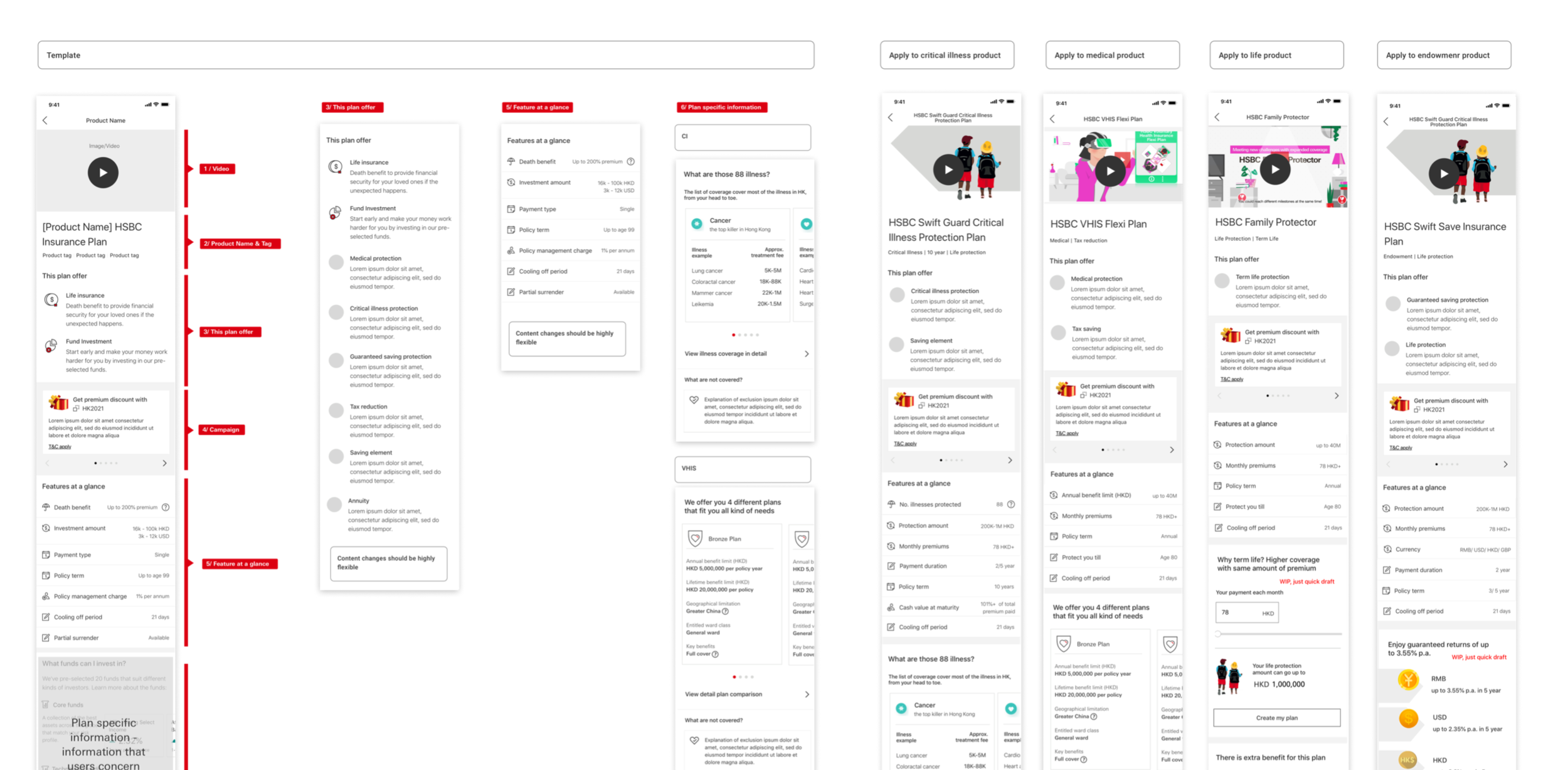
This is the story of how we explored a structure and reusable template for all insurance sales journey in HK & UK. The goal was to provide effective story-telling in a lengthy-yet-smooth journey. The following case study will talk about how we came up with the solution by internal research and external research to understand insurance product and customers’ needs.
❗ As the design is development in progress… I couldn’t disclose too many design detail, but the design process.
📁 Project
HSBC Insurance Sales Journey Template (2022)
💪 My role
Leading the UX UI team (4 designers)
Coordinating with product owner, product team, stakeholders and development team across different markets
📍Market
MVP in Hong Kong & UK, and then scale to global market
—
What’s happening within the company?
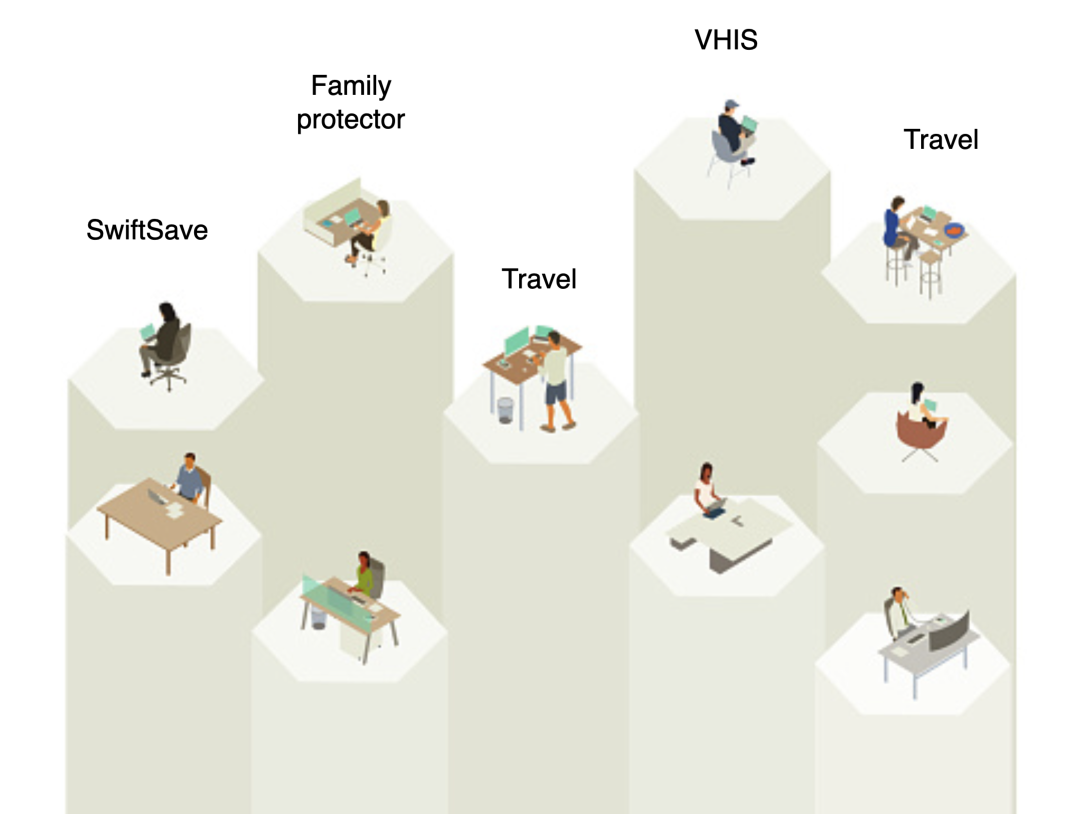
Sales journey are similar – yet we re-work every time.
🐢 Ineffective delivery
Every year we would launch 2-3 digital products, and each time it took us months to re-design and re-develop. It was ineffective as we never stepped back to look at the overall picture.
🤝🏿 The lack of global perspective
When we look at our journey, we only saw it as individual product that fit into only 1 market without scaling it in a global perspective. While similar product was actually sold in UK & HK.
—
What’s happening with our customers?
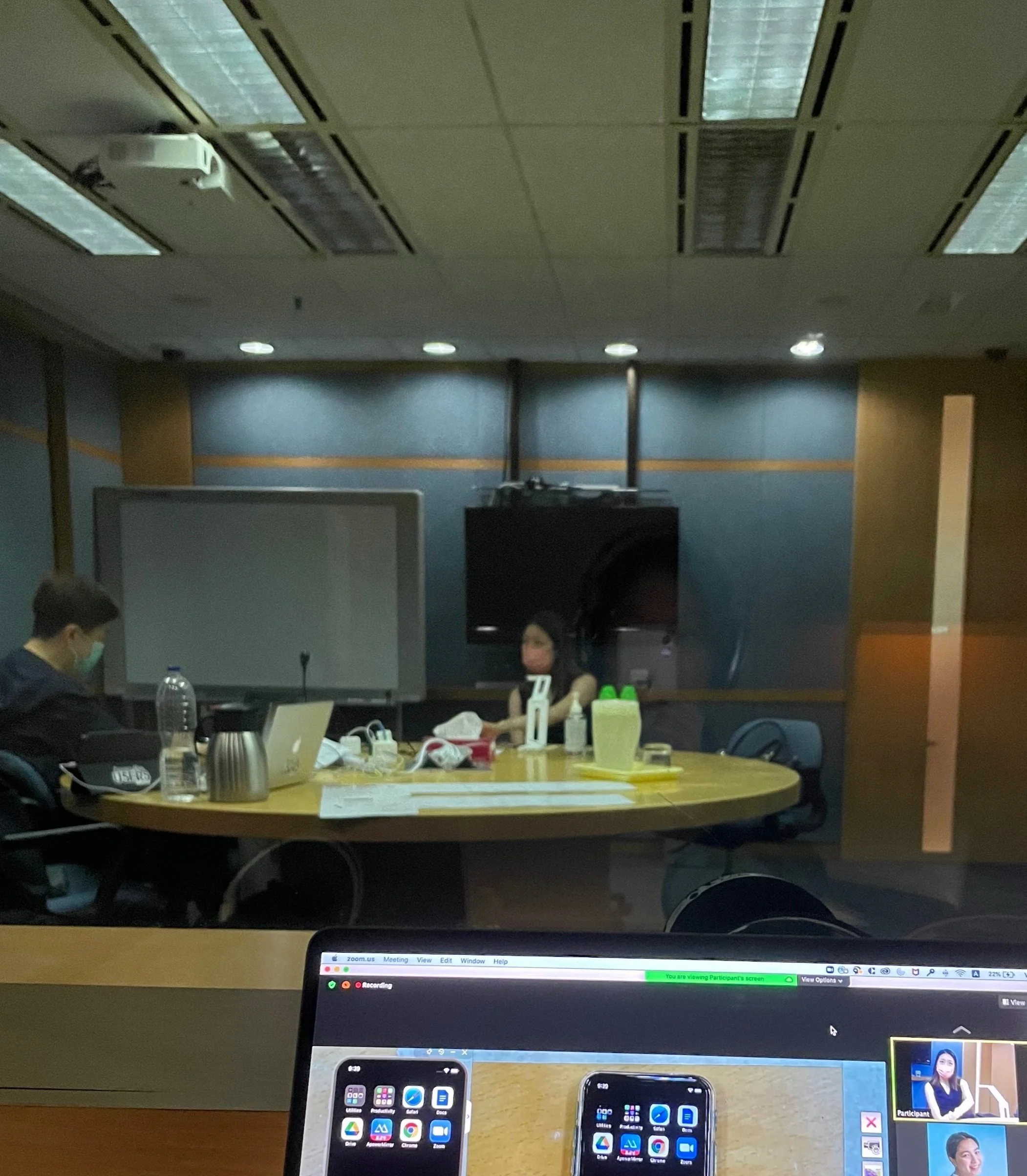
User test & interview process
🛒 Want to buy insurance online without middleman
It is becoming more popular to look for online insurers. They reduce the middleman and provide a more streamline insurance sales journey.
🤯 Difficulties in understand insurance product
Even though customers is looking for online option, they found insurance a complicated product that’s hard to understand. So they would eventually go for the transitional channel – the insurance broker (the middleman).
🆘 Lack of help when it comes to making important decision
Just like what we mentioned in previous section, asking user to tell us they need a 4M protection could be scary. There is no help along side to assure user and educate users.
💸 Lack of information of what happen after purchasing
When we talk with users, they told us they would have google that particular insurance provider to understand its claim/servicing journey. They care not only about the protection, but also the post-purchase service.
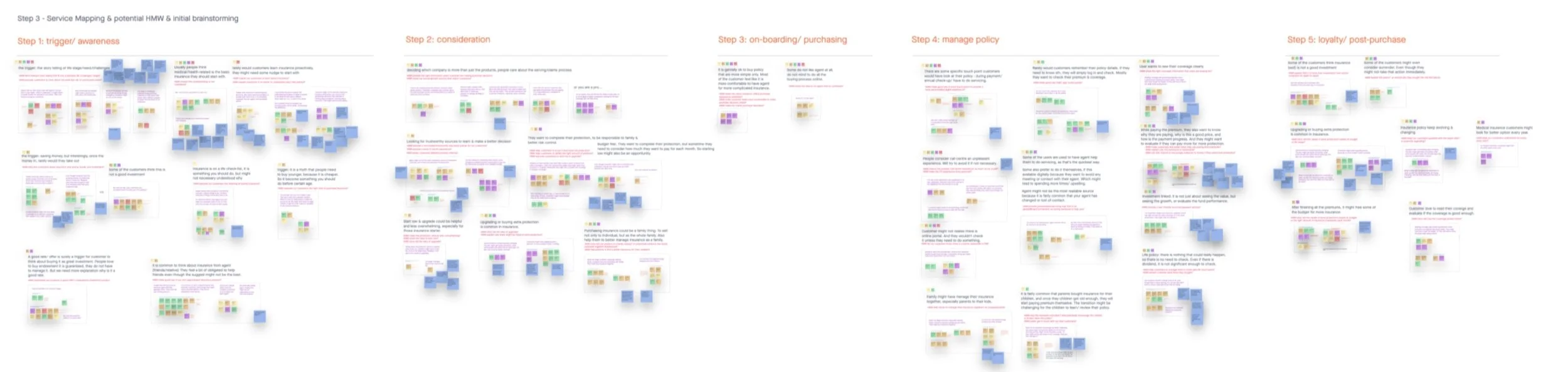
a freehand board that we consolidated all the research finding
—
How might we…
How might we help & guide customers to understand product, hence make a wise purchase decision?
How might we provide a journey template that put customers need in our heart?
How might we provide a scalable template that can work for multiples products in different market?
—
Finding sales journey structure
Understanding the flow of different insurance sales journey
Research #1 - Understanding competitors
🤔 How do they structure their insurance flow?
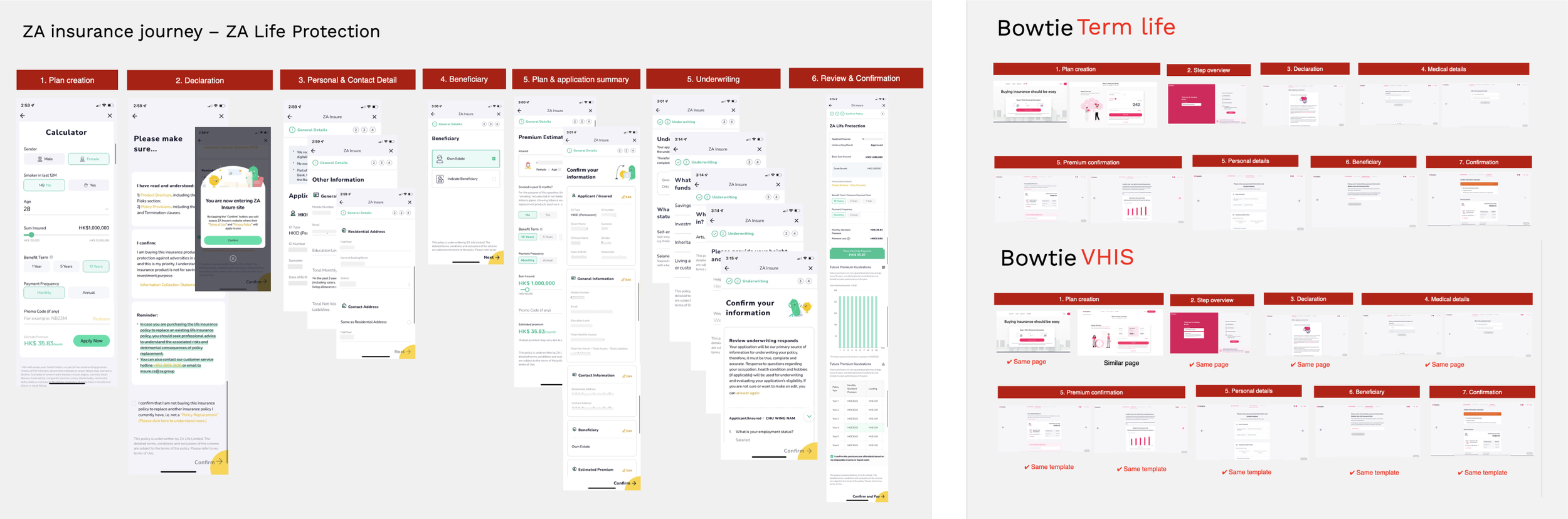
We’ve analysed from our competitors, to learn the method of streamlining a sale journey from a template perspective.
One of the example came from Bowtie (a HK based online insurer), they have multiples insurance journey online and all of them shared a similar journey. For example, the application screen is same across different products.
We found that
🔎 Different products shared the same flow, the difference lies in the content of each page
Research #2 – Analysing all our existing & past sales journey project
🤔 What’s aligned / unaligned for our journey?

We have laid out all the existing insurance journey and identified what’s common across all the product and learnt our product & regulatory requirement.
We found that
🔎 Our journey do have fairly similar flow. However, for pages that serve the same purpose, it look differently, e.g. Payment detail/ applying promo code.
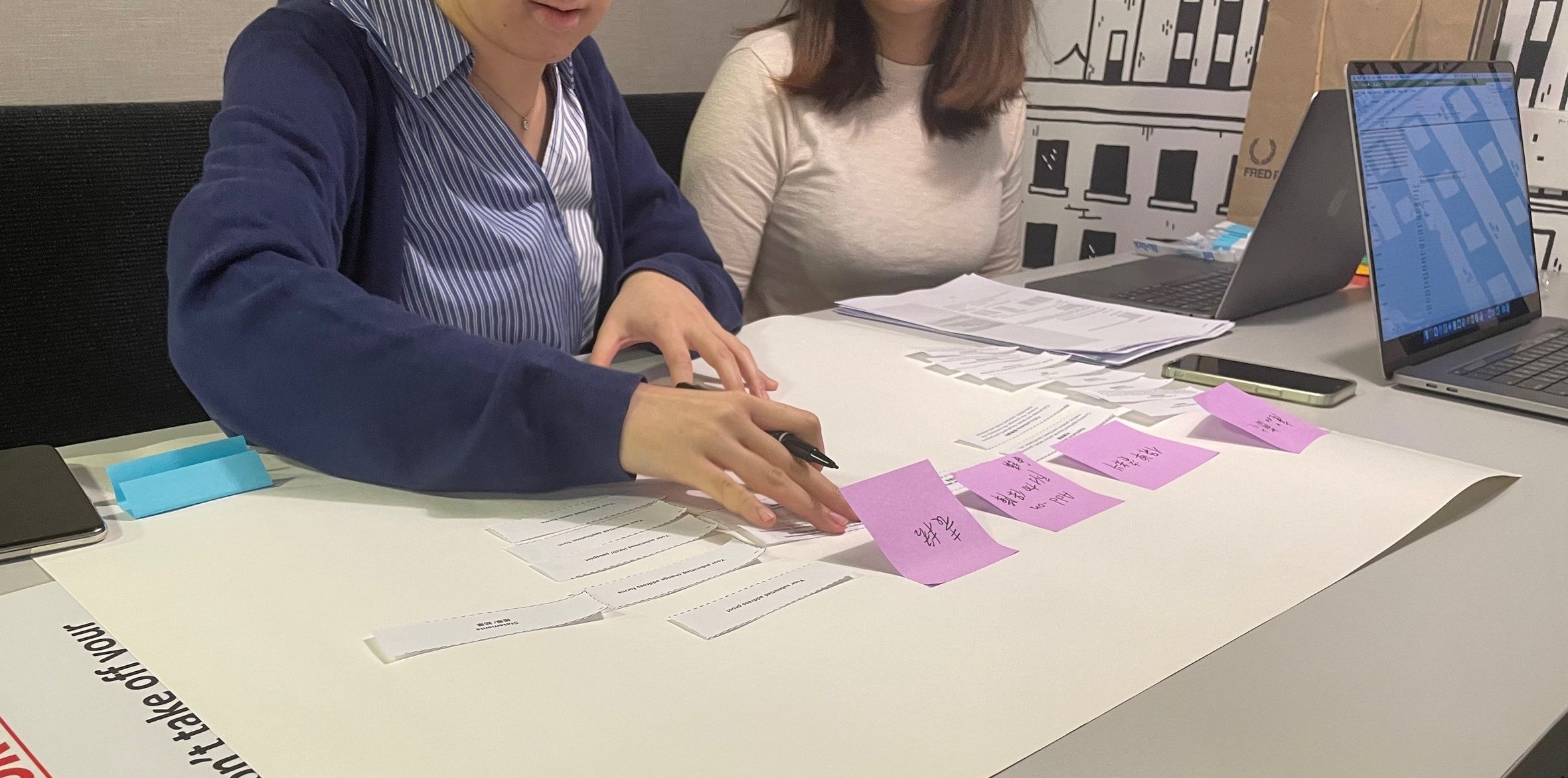
Research #3 – Card sorting exercise
🤔 What information to be grouped together?
🤔 What should be the sequences?
We invited our internal team and staff to quickly do a card sorting exerc for what information to be shown together under the expected sequences.
—
Anatomy of an insurance flow
What we identified as an structure
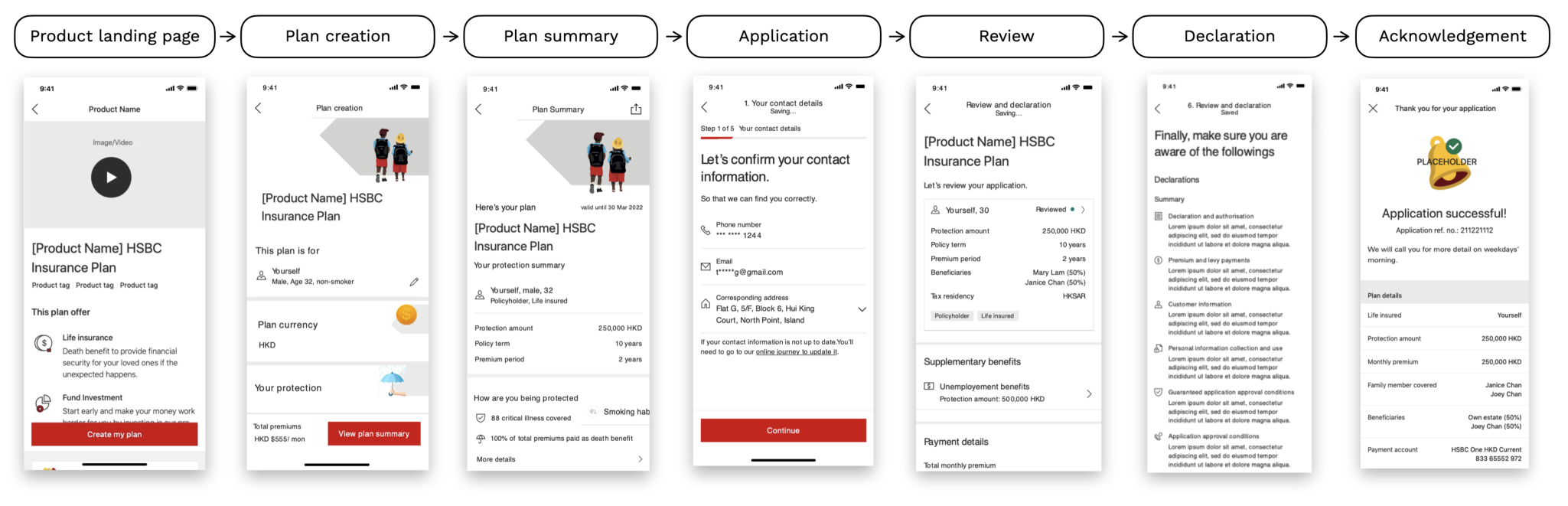
7 key steps in all sales journey
Product Landing Page
Plan Creation
Plan Summary
Application
Review
Declaration
Acknowledge
We found that
💡It helped us to break a huge project into 7 achievable deliverables – to define the structure of each of the steps
💡 and yet…. it was highly complexed given the variety of the products in different markets
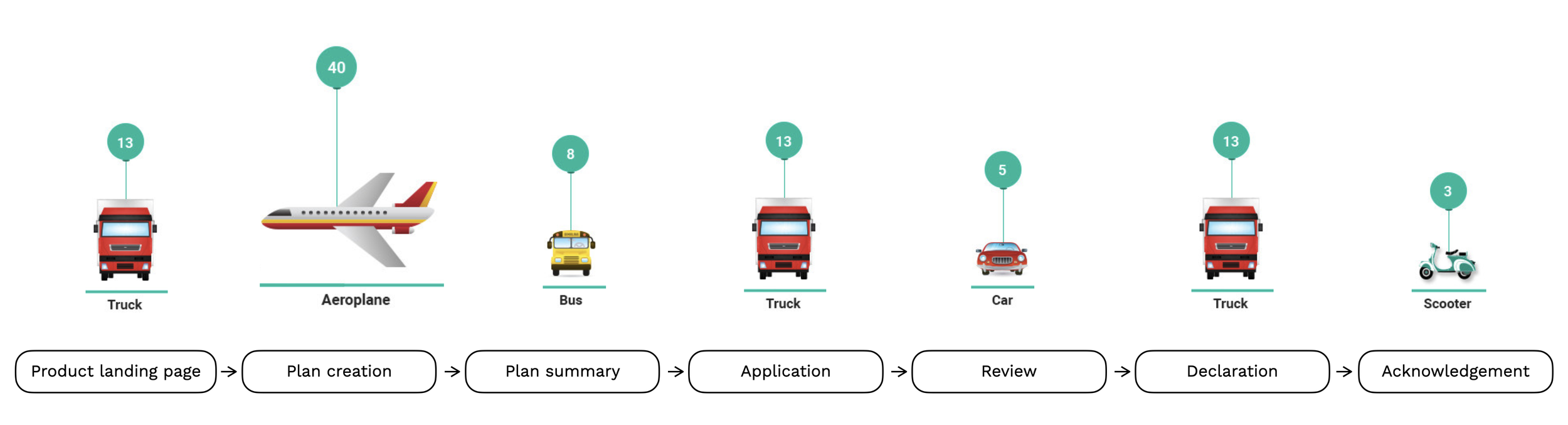
Use of story-point as example to describe the complexity
—
Deep dive into the complexity
Gathering the product requirement across different market
Action #1 – Analysing the product requirement of different products across different market
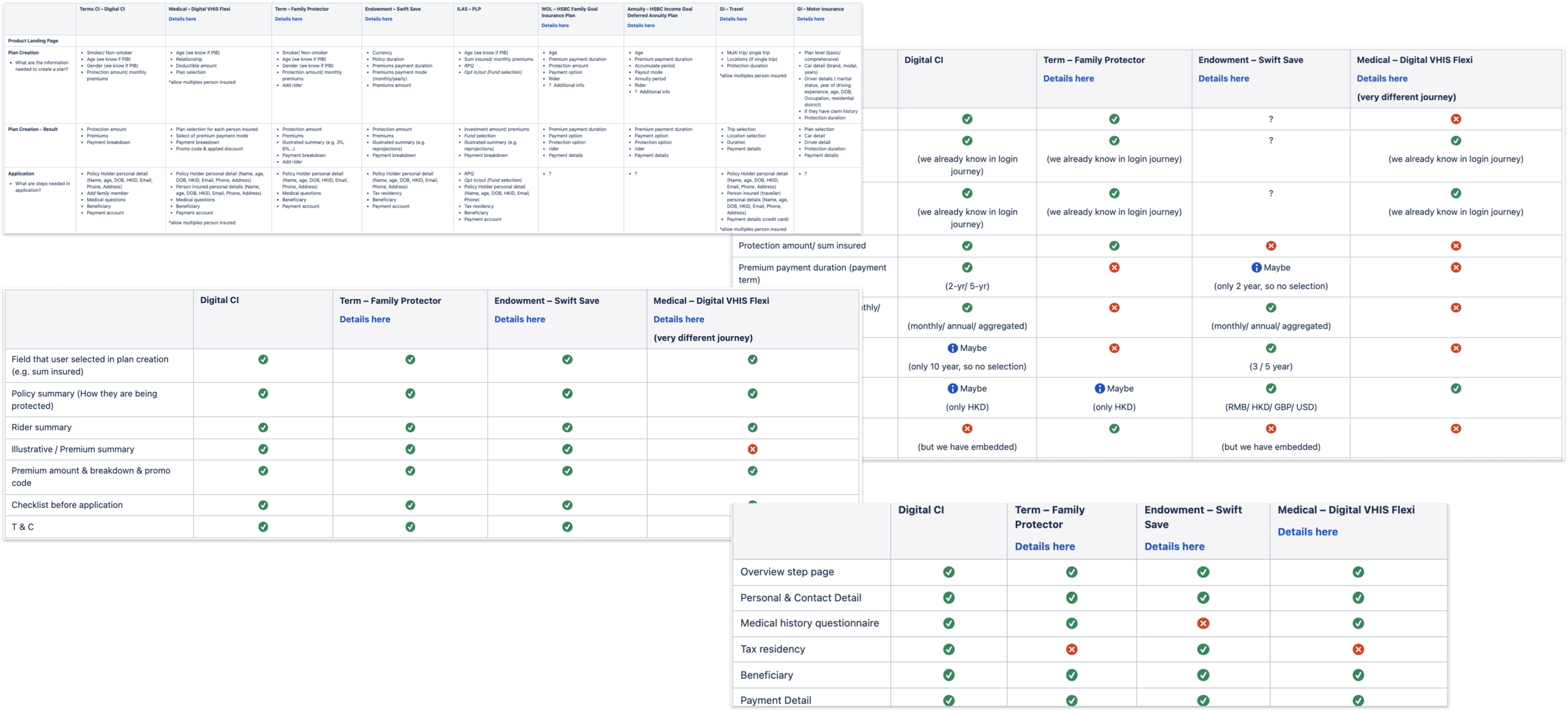
Building a template – we’ll need to consider all of the scenario and requirement, what would be the most extreme scenario. It’ll help us on defining a highly flexible component.
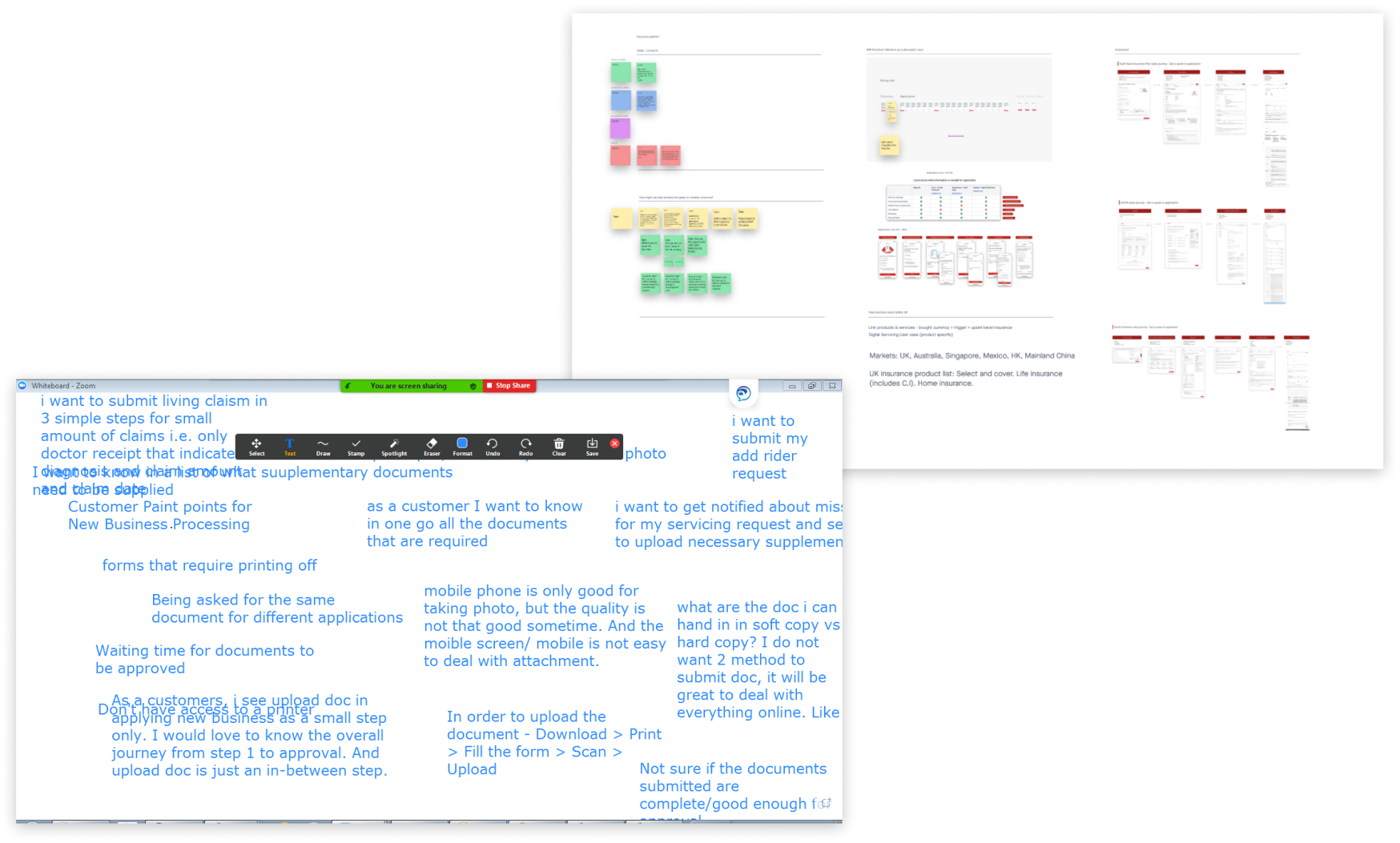
brainstorming with zoom annotation or freehand
Action #2 – Weekly business workshop
As the needs of different market is different. The HK & UK team have a weekly connect to share requirement, past experience, design updates, brainstorming, or concern together.
Action #3 – Understanding our technical capability
Apart from connecting with business team, this project is highly relied on technical feasibility in building a strong code base that can be reuse across market. Therefore, we have constant communication with development team to understand feasibility and capability.
